

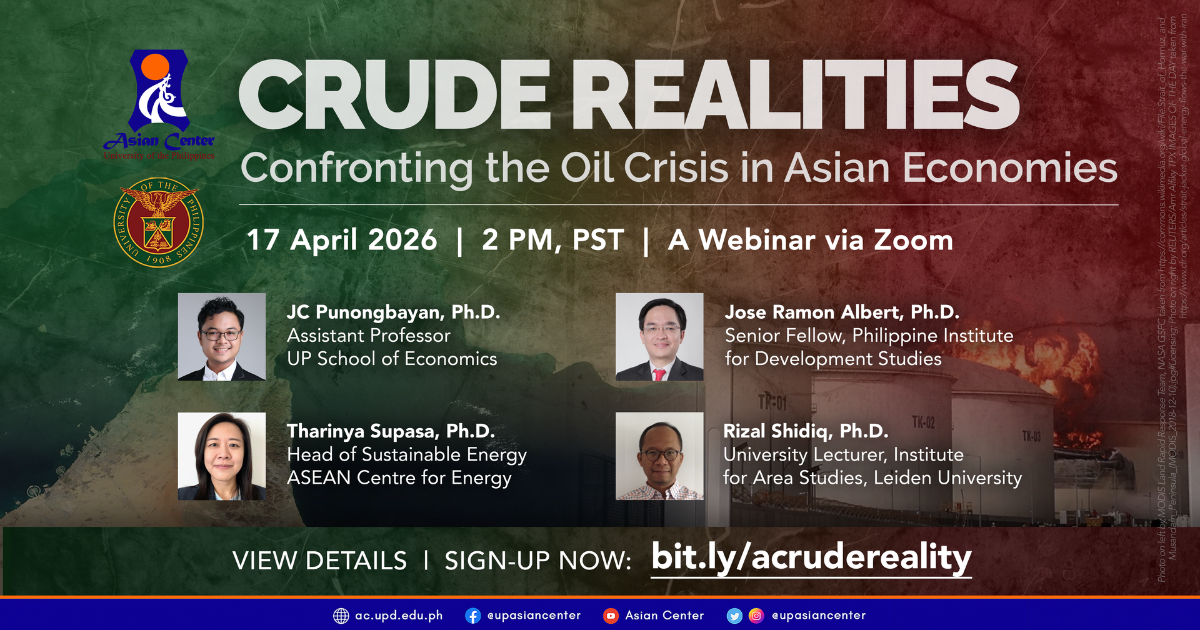
The UP Asian Center will be holding the webinar "Crude Realities: Confronting the Oil Crisis in Asia" on 17 April 2026, 2:00 PM, PST (GMT+8), online via Zoom. The event is free and open to the public, but signing in to a (free) Zoom account is required.
ABOUT THE WEBINAR
More than a month has passed since the United States and Israel launched an attack on Iran, and the endgame is nowhere in sight. While the Iranian people have borne the brunt, the rest of the world is no exception. Despite not having been directly involved in the conflict, other parts of Asia face the unprecedented impact of the Iran Crisis. Asian Economies have been experiencing an alarming combination of surging energy costs, fuel supply issues, currency devaluation, capital outflows, manufacturing slowdown, and inflationary pressures.
In the Philippines, the government declared a State of National Energy Emergency, providing for energy conservation measures including a four-day work week, travel disruptions, subsidy for public transport workers, and other initiatives to cope with the fuel shortage and rising prices. Other countries in the region have also been experiencing a similar predicament. Macroeconomic policymakers must now make difficult decisions to stabilize inflation, sustain economic growth amid worsening energy deficits, and depreciating currencies.
In light of this, the webinar aims to shed light on the experiences and prospects for Asian countries in dealing with the crisis. With an emphasis on examining the economic impacts of the war, this discussion seeks to provide a platform for the exchange of insights as well as guidance for policy-making. Specifically, it seeks to answer:
- What are the challenges that Asian countries are experiencing in light of the Iran War?
- What are possible options for monetary and fiscal policies to stabilize the economies in the region? How will these measures affect investments, international trade, and supply chain networks in Asia?
- What are the energy supply and development alternatives to the existing dependence on the Gulf region?
ABOUT THE SPEAKERS
JC PUNONGBAYAN, Ph.D.
Assistant Professor, UP School of Economics
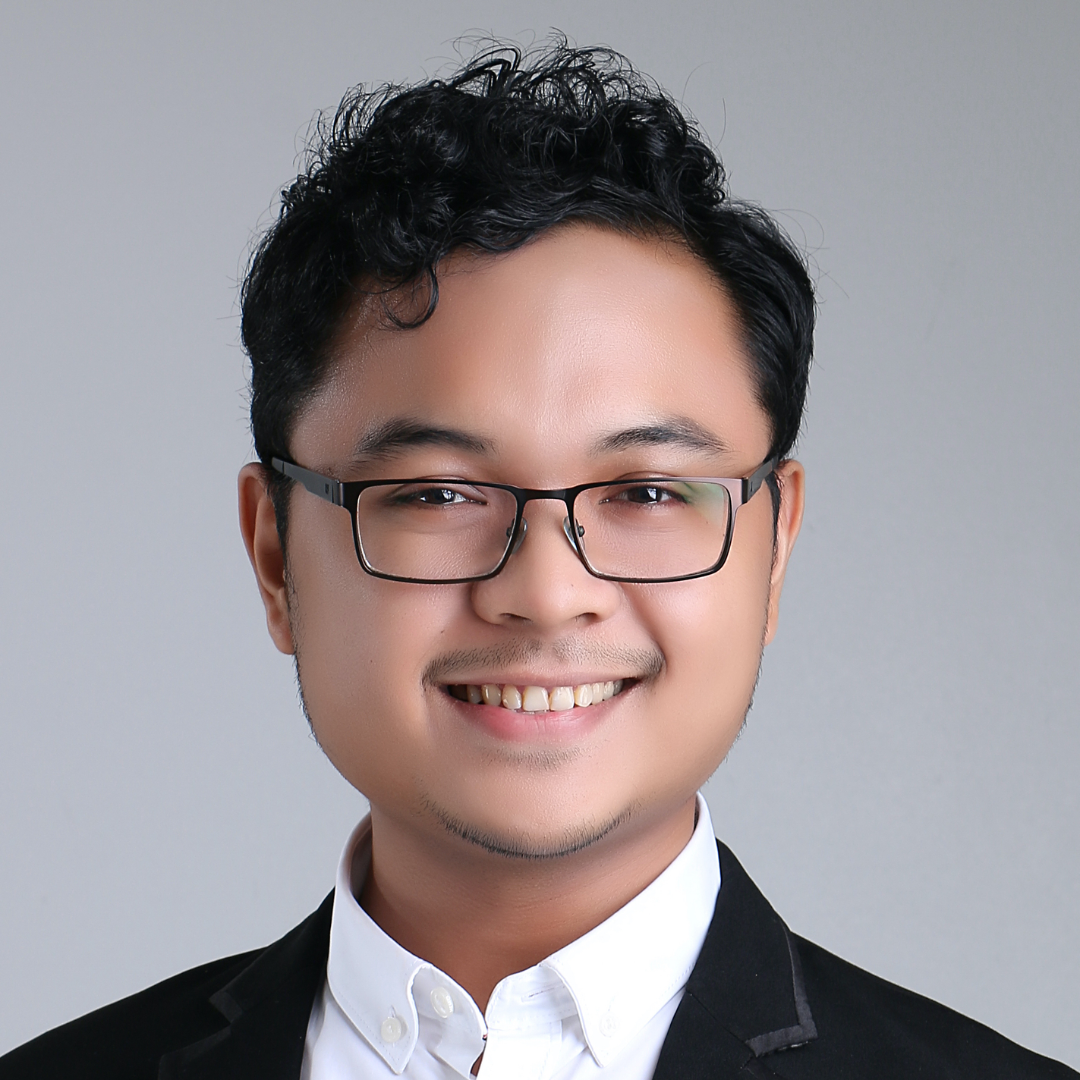
JC Punongbayan is an Assistant Professor at the University of the Philippines School of Economics or UPSE. He is also a former Visiting Fellow of the ISEAS–Yusof Ishak Institute in Singapore. He earned my PhD in Economics from UPSE in 2021, where he also graduated summa cum laude in 2009 (BS Economics) and received the José Encarnación Jr. Award for Excellence in Economics and the Gerardo P. Sicat Award for Best Undergraduate Thesis. Before joining the UPSE faculty, he worked as an economist at the Philippine Securities and Exchange Commission, a consultant at the World Bank office in Manila, the head executive assistant at the National Economic and Development Authority (NEDA), and the research coordinator of the Far Eastern University Public Policy Center. Apart from his academic work, he is also a columnist for Rappler.com, and co-host of Usapang Econ Podcast (available on Spotify and other podcast platforms). His research interests include Education economics, Macroeconomics, Development economics, and Philippine economic history. In 2024, he was awarded the Outstanding Young Men (TOYM) Award by JCI Philippines and the TOYM Foundation for his work in economics.
THARINYA SUPASA, Ph.D.
Head of Sustainable and Renewable Energy, ASEAN Centre for Energy
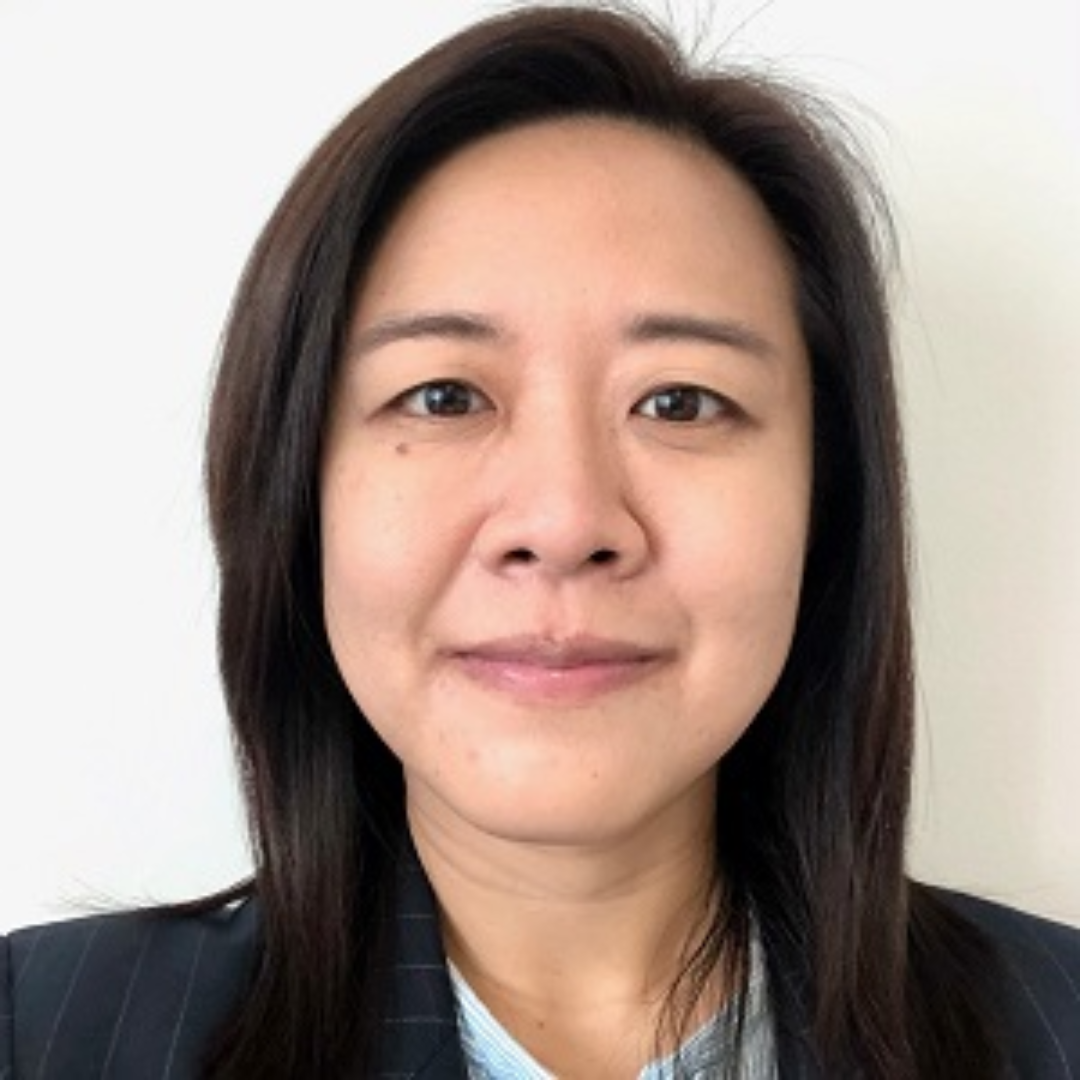
Dr. Tharinya Supasa is the Project Lead for Energy Policy Southeast Asia at Agora Energiewende, leading regional decarbonization initiatives like CASE and TGC-EMC to support Thailand’s 2050 carbon neutrality goal. Her scholarly impact includes serving as Chief Editor and Lead Modeler for the 6th ASEAN Energy Outlook (AEO6), co-authoring AEO7, and advancing the ASEAN Power Grid through demand-driven policy research. Backed by an award-winning Ph.D. and Postdoc in Energy Engineering from National Central University, she also holds degrees from Warwick University and Chiang Mai University, blending rigorous energy-economic modeling with high-level policy advisory.
JOSE RAMON ALBERT, Ph.D.
Senior Research Fellow, Philippine Institute for Development Studies
Dr. Jose Ramon Albert is a professional statistician and senior research fellow at the Philippine Institute for Development Studies. Dr. Albert obtained his Bachelor of Science in Applied Math from De La Salle University, Master of Science in Statistics, and a Doctor of Philosophy in Statistics from the State University of New York at Stony Brook. He led the National Statistical Coordination Board as Secretary General before it was merged into the Philippine Statistics Authority. Dr. Albert has consulted for various government agencies, private firms, and international organizations. Over two decades, he has worked in 25 countries across different regions on poverty diagnostics, econometrics, and survey analysis. He has also taught at various higher education institutions in the Philippines and has written on education, poverty, social issues, and development.
RIZAL SHIDIQ, Ph.D.
University Lecturer, Leiden University Institute for Area Studies
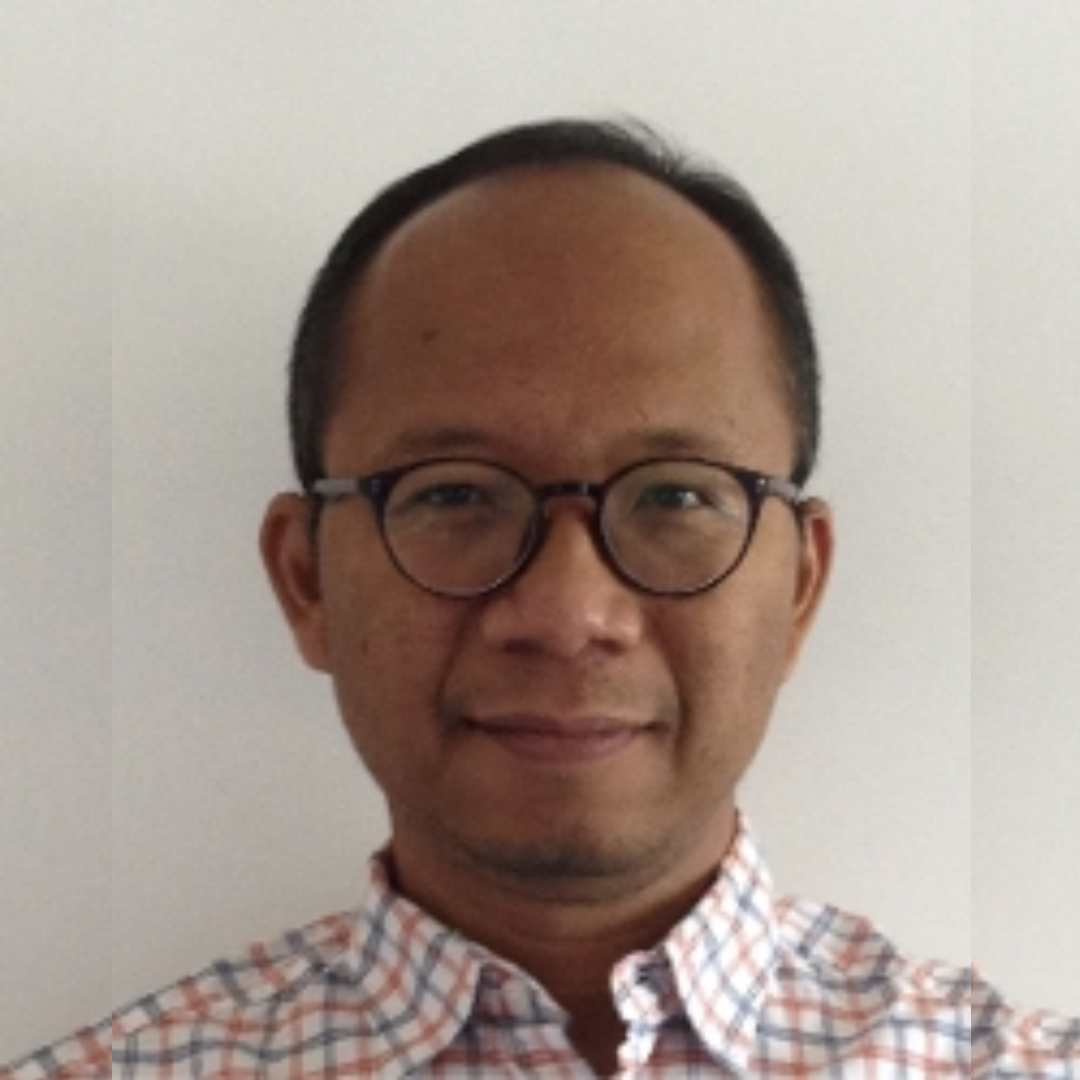
Rizal Shidiq is a University Lecturer at South and Southeast Asian Studies, Leiden University Institute for Area Studies, specialising in the economies of modern Southeast Asia. He is an economist by training with primary fields in development economics and secondary field public choice. His current research topics are on political connections in developing countries, religious intolerance, and carbon trade.
ABOUT THE REACTOR
PHAM SY THANH, Ph.D.
Director, Director of China Center for Economic and Strategic Studies (CESS)
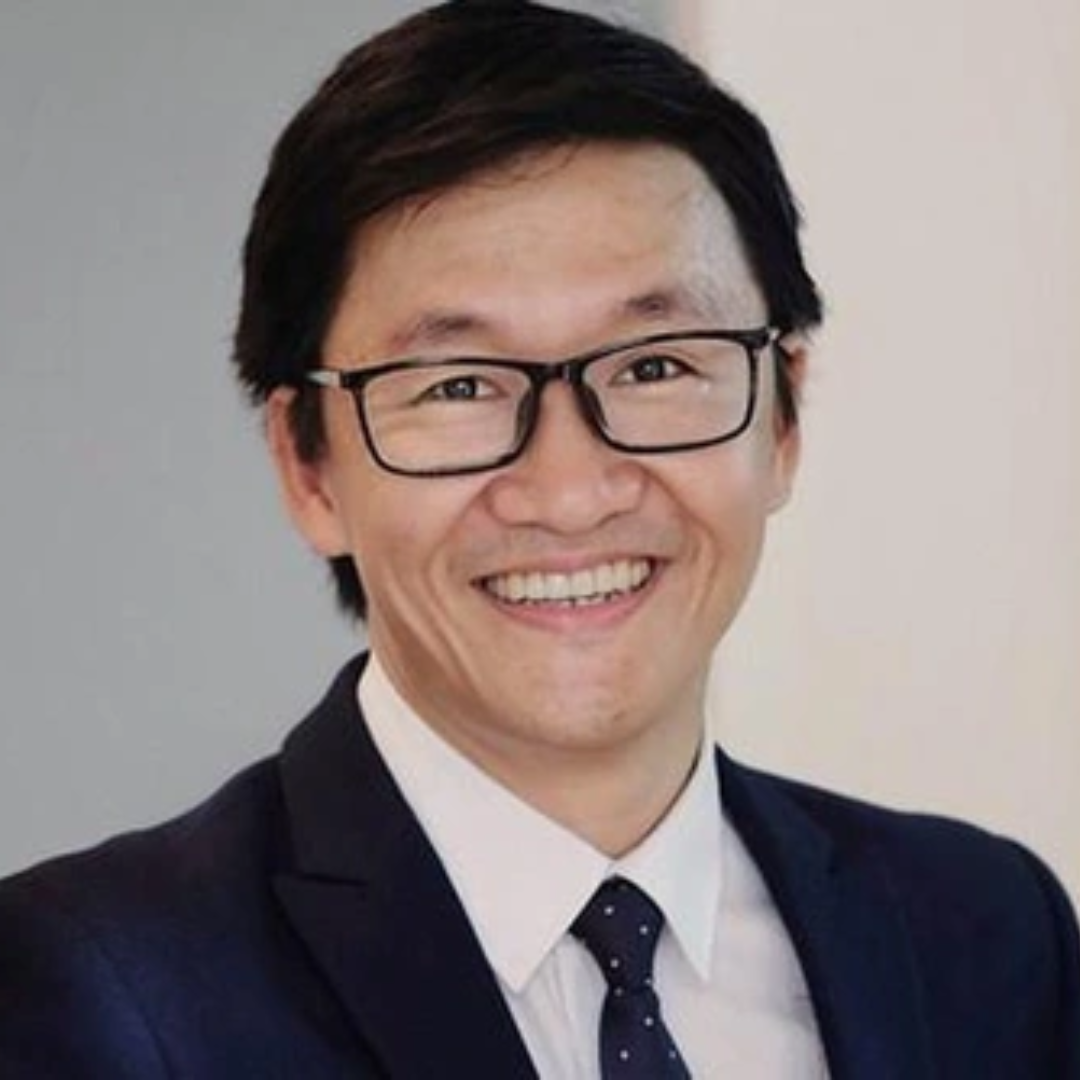
Dr. Pham Sy Thanh received his bachelor's degree in Chinese Studies and master's degree in Oriental Studies from the University of Social Sciences and Humanities (USSH), Vietnam National University, Hanoi. In 2008, he earned his Ph.D. in Economics from the Institute of Economics, Nankai University, Tianjin, China. Dr. Thanh has been the Director of VEPR’s Chinese Economic Studies Program (VCES) since January 2012. His research interests include Economic Growth Theory and Chinese Economic Growth (since 1949), China-ASEAN Economic Relations, Chinese State-Owned Enterprises Reform (since 1978), Antitrust, New Institutional Economics, Chinese Macroeconomy, etc. Currently, Dr. Pham Sy Thanh is a lecturer of the Faculty of Oriental Studies, University of Social Sciences and Humanities, Vietnam National University, Hanoi.