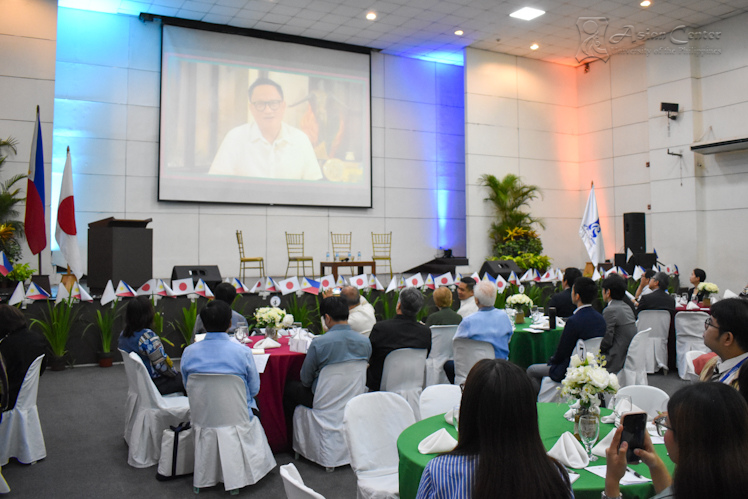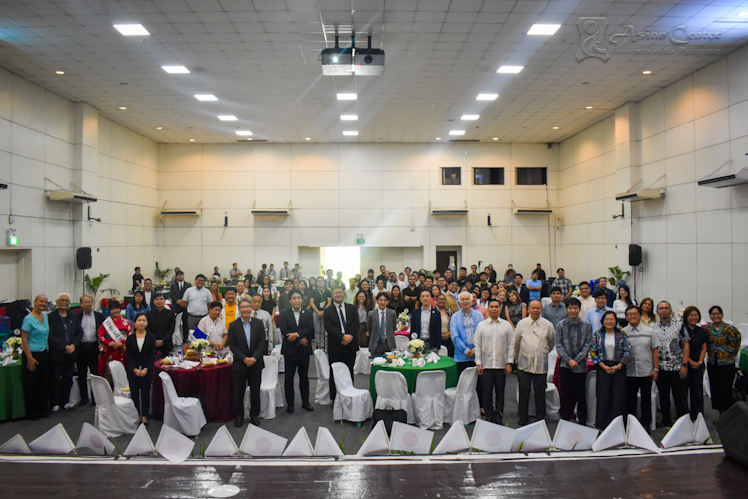

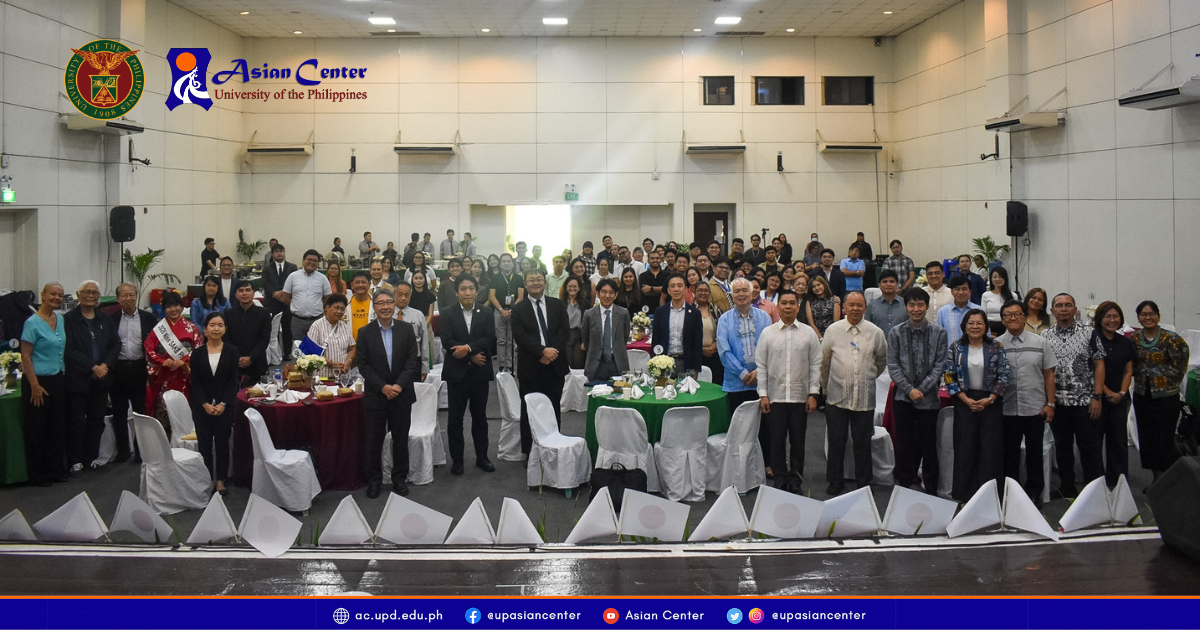
Seventy years after the Philippines and Japan normalized diplomatic relations, scholars, diplomats, military officials, and civil society leaders gathered at the GT-Toyota Asian Center Auditorium in UP Diliman on 19 June 2026 for a day-long symposium on the two countries' partnership.
QUEZON CITY — Seventy years after the Philippines and Japan normalized diplomatic relations, scholars, diplomats, military officials, and civil society leaders gathered at the GT-Toyota Asian Center Auditorium in UP Diliman on 19 June 2026 for a day-long symposium on the two countries' partnership.
The event, "Revisiting the Past, Weaving the Future Together," was organized by the UP Asian Center and the Japan Foundation Manila to mark the 70th anniversary of the Philippines-Japan diplomatic normalization. It was built around four panels — history, economics, security, and people-to-people ties — and drew participants from government, academe, the military, and civil society to look back at seven decades of cooperation and discuss where the relationship might go next, particularly given growing security challenges in the Indo-Pacific.
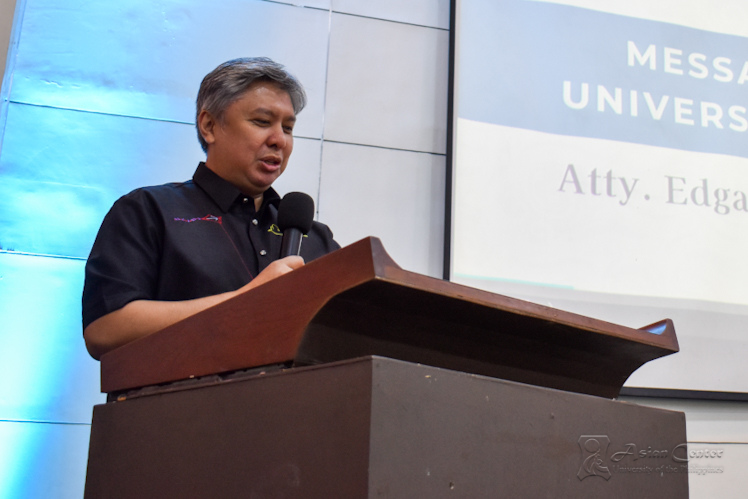
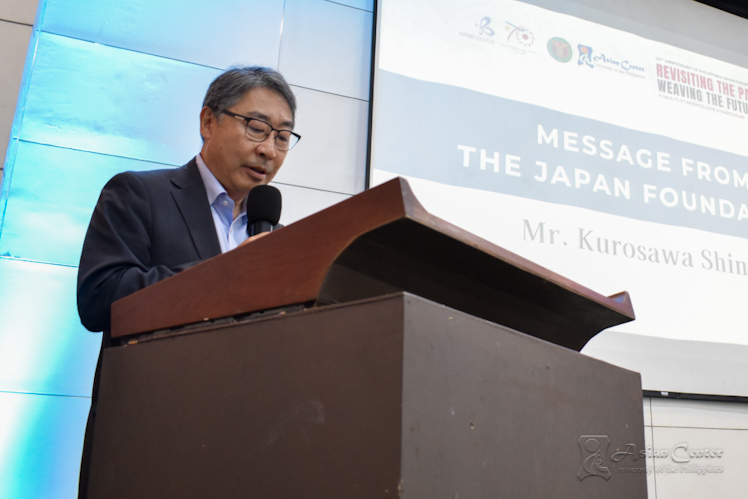
The day opened with the Philippine and Japanese national anthems, followed by remarks from Atty. Edgardo Carlo L. Vistan II, Chancellor of UP Diliman; Mr. Kurosawa Shinya, President of the Japan Foundation Headquarters; and Atty. Angelo A. Jimenez, President of the University of the Philippines.
Panel 1: Evolution of Philippines-Japan Relations
Dr. Ricardo T. Jose, Professor Emeritus at the UP Department of History, opened the panel discussions by framing the 70th anniversary as one point in a much longer history, tracing contact between the two countries back roughly six hundred years. He covered trade under colonial rule, the disruption of Japan's Closed-Door period, and renewed contact from the late 1800s, including Jose Rizal's time in Japan and ties built by figures like Mariano Ponce and Gen. Artemio Ricarte. He also spoke about the Japanese Occupation, still the hardest chapter in the relationship, before tracing the path to the 1951 San Francisco Peace Treaty and the 1956 Reparations Agreement that restored diplomatic ties. From there, he covered milestones such as the 1962 visit of then-Crown Prince Akihito, growing scholarships and cultural exchange, and expanding trade — noting that friction, from the comfort women issue to the "Japayuki" phenomenon, has never fully disappeared but has consistently been worked through rather than left unresolved.
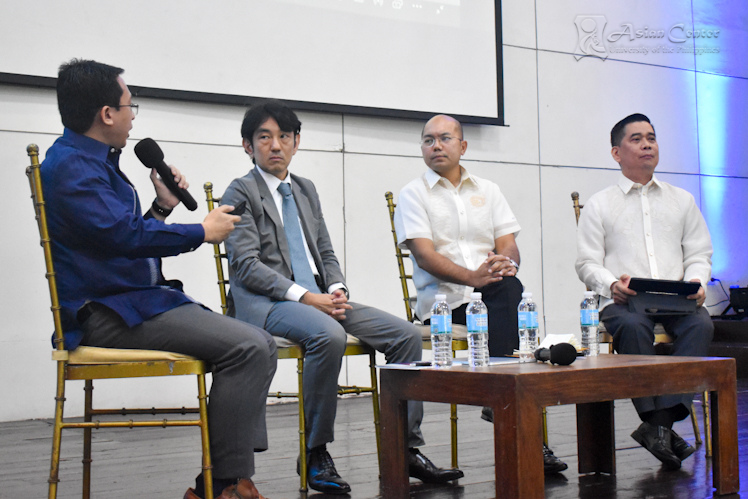
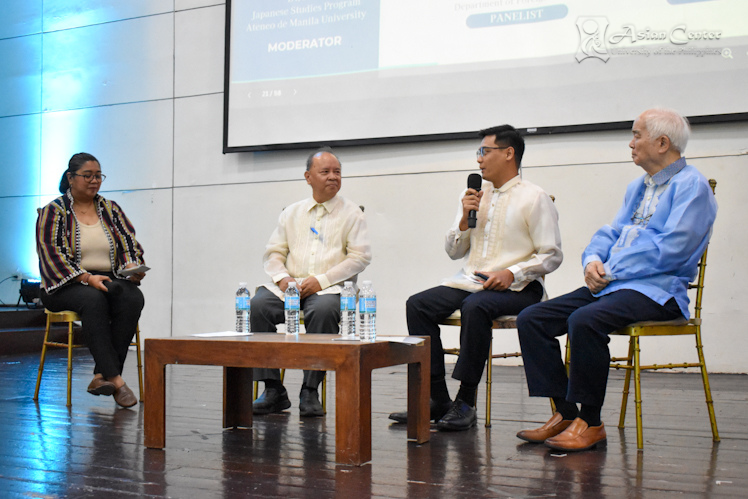
Panelists Mr. Venince Allen V. Carillo, Acting Director of the Northeast Asia Division at the Department of Foreign Affairs, and Mr. Nobuo Fujii, Executive Director of the Japanese Chamber of Commerce and Industry of the Philippines, responded with government and business-sector perspectives on how the relationship has matured over time. Dr. Kristine Michelle L. Santos, Director of the Japanese Studies Program at Ateneo de Manila University, moderated the session.
Panel 2: Economic Cooperation and Development
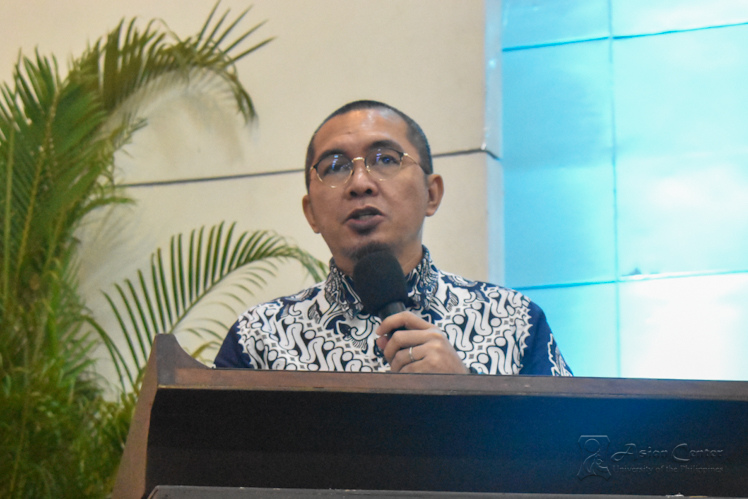
Dr. Toru Nakanishi, Professor Emeritus at the University of Tokyo, opened with his own fifty-year history in the Philippines, starting with a 1980 visit where Prof. Randy David told him the Philippines saw the US as its first enemy and Japan as its second, and his later fieldwork in Malabon with a host family that had lost relatives to Japanese soldiers. He argued that decades of economic cooperation have produced formal reciprocity but real asymmetry underneath — pointing to Japanese manufacturing in the Philippines that is mostly export-oriented back to Japan, and to a large gap in recent care-worker exam pass rates between Filipino and Vietnamese candidates, which he tied to differences in state-backed language support rather than ability. He then discussed large asset managers like BlackRock and Vanguard as a kind of financial authority that disciplines both states and localities, and presented Japan's teikei farming networks and the Philippines' MASIPAG as examples
of communities building cooperation and trust outside that system. He closed with a call for more direct farmer-to-farmer exchange and small, flexible, trust-based funding in place of large loans.
Panelists Mr. Takanori Morishima, Senior Representative of JICA Philippines, and Mr. Mark Anthony A. Barral, Research Associate at the Philippine Institute for Development Studies, discussed the role of development assistance and policy research in sustaining economic ties. Dr. Alexander Michael G. Palma, Assistant Professor at the UP Asian Center, moderated the session.
Panel 3: Strategic and Security Cooperation
Dr. Kei Koga, Associate Professor at Nanyang Technological University, opened with survey data showing the Philippines ranks first in ASEAN in confidence that Japan will act responsibly on regional security, and linked this to the Comprehensive Strategic Partnership announced at the May 2026 Japan-Philippines Summit, covering security, economic, and socio-cultural cooperation. He argued that ties have deepened quickly since the Cold War due to three factors: the rising importance of maritime security, sharper great-power competition, and growing overlap in strategic interests. He traced Japanese support for Philippine coast guard capacity, patrol vessels, and disaster response, and pointed to newer frameworks like the "Squad" grouping of the US, Japan, Australia, and the Philippines, the 2025 Balikatan exercises with full Japanese participation, and ongoing talks on an Acquisition and Cross-Servicing Agreement and a General Security of Military Information Agreement. He closed by asking whether Japan and the Philippines can really be called equal partners given the gap in economic and defense capability, noting the Philippines' geography, younger population, and role in ASEAN as sources of leverage.
Panelists Hon. Julius A. Yano, Assistant Secretary at the National Maritime Council, and Capt. Nerelito P. Martinez PN (MNSA), Assistant Chief of Naval Staff for Plans N5 of the Philippine Navy, brought maritime and defense policy perspectives to the discussion. Dr. Aaron Jed B. Rabena, Assistant Professor at the UP Asian Center, moderated the session.
Panel 4: People-to-People Exchanges
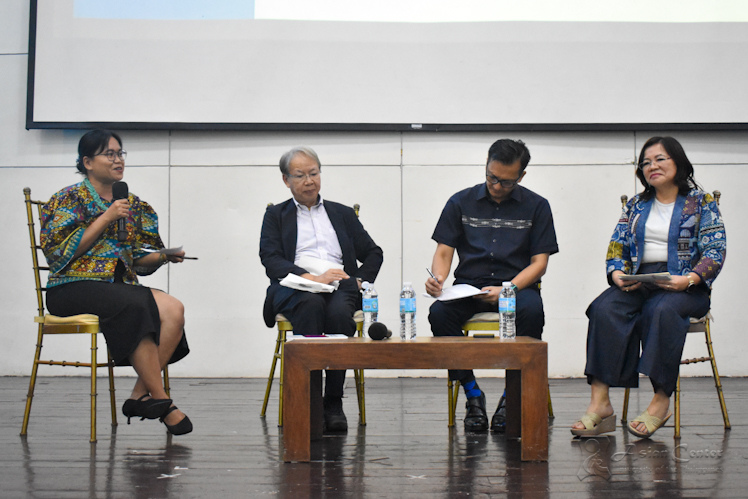
Dr. Shun Ohno, Affiliate Professor at Kyoto University's Center for Southeast Asian Studies, traced the movement of people between the two countries, from the large prewar Japanese community in the Philippines through the harder decades of Filipino entertainers working in Japan and the stereotypes and diplomatic tension that followed, including the 1991 death of entertainer Maricris Sioson. He then reviewed fifty years of Philippine labor policy and the growing number of Filipino nurses and care workers entering Japan under Economic Partnership Agreement schemes since 2008. He noted that Filipino views of Japan have shifted from distrust to trust since the late 1990s. He said labor migration between the two countries will likely keep growing given Japan's aging population and the Philippines' younger workforce, though language requirements, the weaker yen, and competition from other countries remain challenges.
Panelists Hon. Levinson C. Alcantara, Assistant Secretary for Policy and International Cooperation at the Department of Migrant Workers, and Dr. Ines Yamanouchi P. Mallari, President of the Federation of Nikkei-Jin Kai Philippines, spoke to the lived experience of Filipino migrant workers in Japan and the Filipino-Japanese diaspora community, respectively. Dr. Jocelyn O. Celero, Professor at the UP Asian Center, moderated the session.
Closing the Day
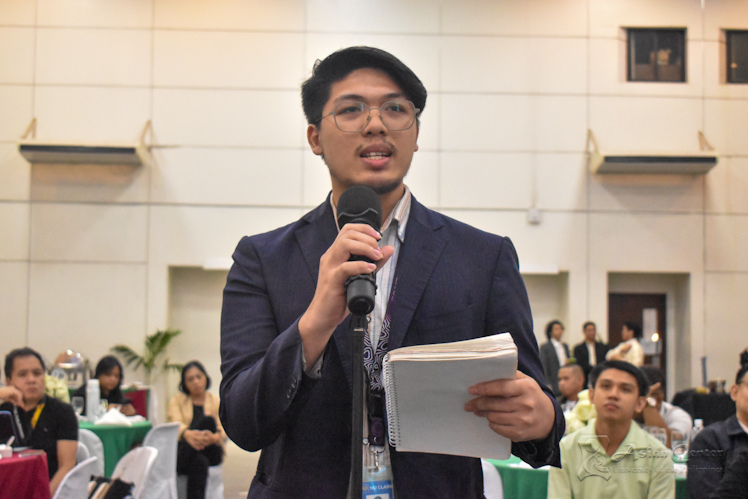
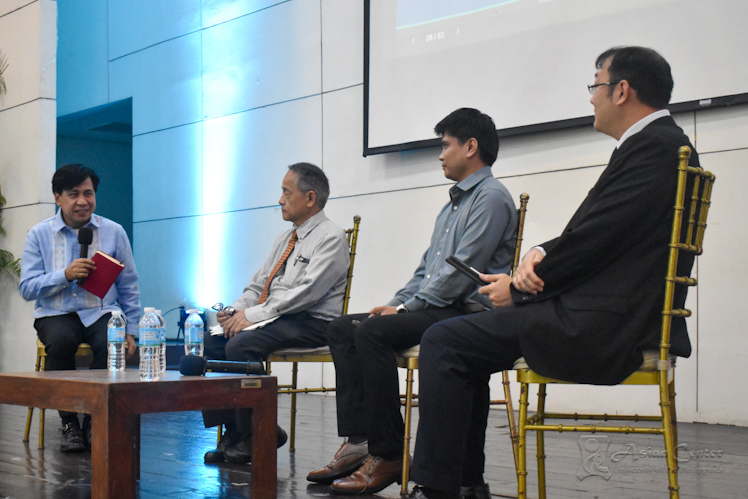
Each panel included an open forum led by its moderator, giving attendees the chance to engage directly with panelists from government, business, and the military. Ms. Altamira Chantrelle M. Reyes and Mr. Tyrone Kit B. Agres, both MA in Asian Studies (Northeast-Japan) students, served as masters of ceremonies. The symposium closed with remarks from Dr. Noel Christian A. Moratilla, Dean of the UP Asian Center.
Looking Forward
The four panels covered different ground — a long-shared history, an economic relationship with real gaps beneath its formal equality, a security partnership growing quickly under regional pressure, and a human relationship still working through a difficult past. Together, they suggested that the strength of Philippines-Japan relations rests as much on trust built over time and person-to-person ties as on formal summits and agreements.
More Photos of the Event