

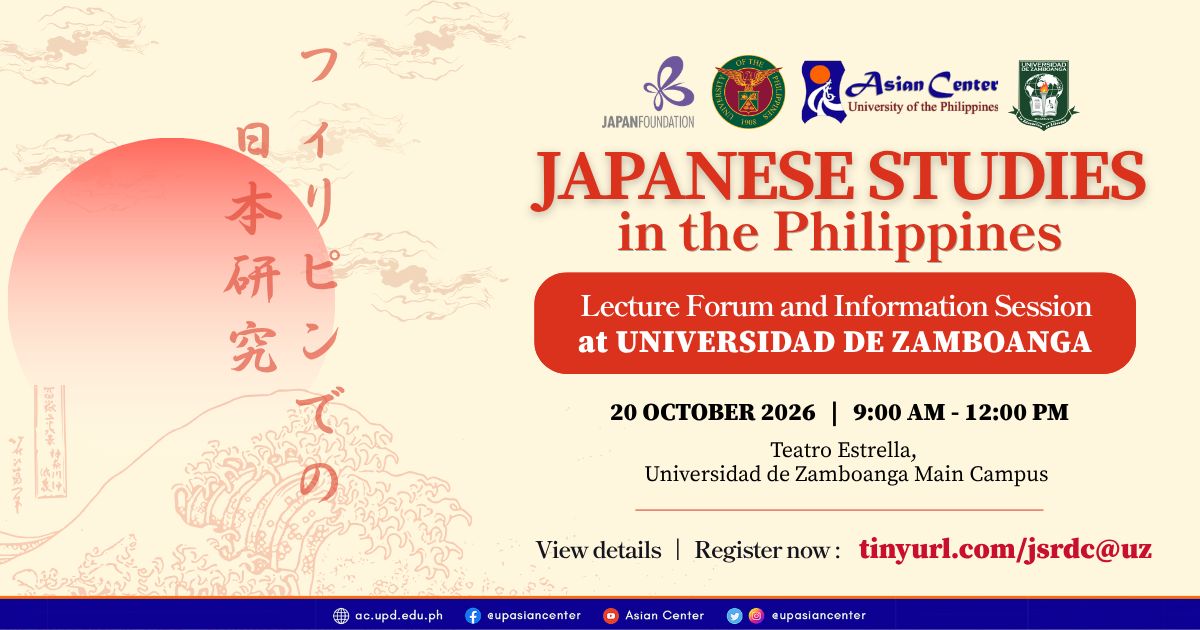
The UP Asian Center, the Japan Foundation Manila, in partnership with the Universidad de Zamboanga, will hold the Universidad de Zamboanga Leg of Japanese Studies in the Philippines: Lecture Forum and Information Session on 20 October 2026, 9:00 AM - 12:00 PM (GMT+8), ONSITE at Teatro Estrella, Universidad de Zamboanga Main Campus. The event is free and open to the public.
ABOUT THE LECTURES AND SPEAKERS
Un-Forgetting Yaeko: The Japanese Studies Dilemma of Japan and Southeast Asia
Yaeko Yamamura (1899-1996), was a Japanese woman who collected shellfish and birds in Basilan in the Philippines from the Taisho period to the Showa period. She donated more than a thousand and seven hundred shell specimens to the National Museum of Natural Science in Tsukuba City, Ibaraki Prefecture. During her stay in the Philippines, her family was known to have deep ties with the soon-to-be Independent government of President Manuel Quezon. Despite being such an impressive person, she is neither in Japanese nor Philippine histories. In Philippine history, the Japanese are often remembered for their awful deeds during the occupation in World War II, and are usually treated with suspicion. Within Japanese history, despite her contributions to the sciences, her gender and the location of her site has made her invisible. Yaeko Yamamura is a different and important connection between the Philippines and Japan that can engage both countries in a new conversation regarding each other’s history. Rather than use the term “remembering” which is to recall known information, this study uses the term “un-forgetting” as the history is perceived as something suppressed, or forgotten. Such conversations can then lead to larger conversations particularly in relationship to Southeast Asia on what else needs to be un-forgotten.
KARL IAN CHENG CHUA, Ph.D.
Assistant Professor, Asian Center, UP Diliman
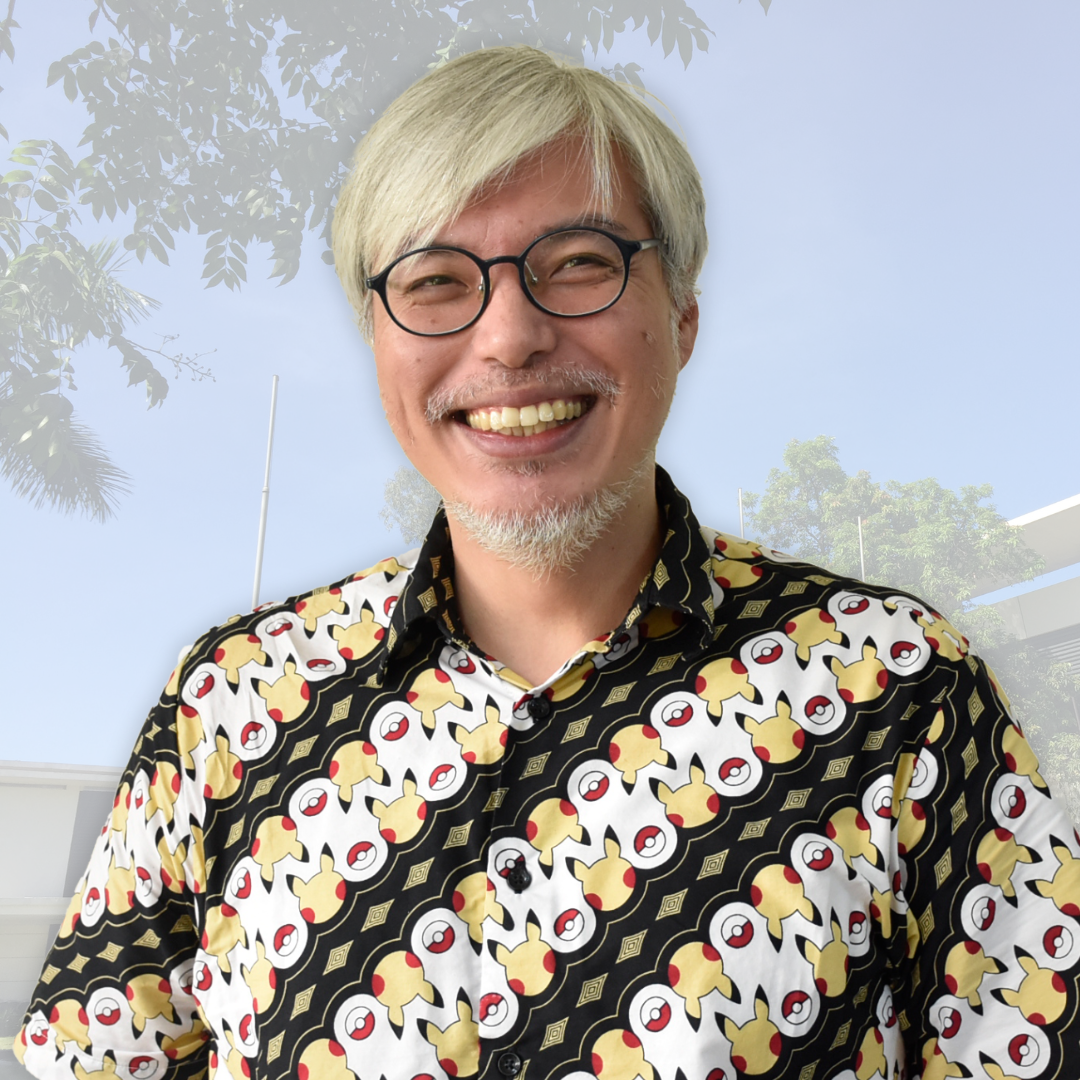
Karl Ian Cheng Chua, Ph.D. is an Assistant Professor at the Asian Center, University of the Philippines Diliman. He served a Professorial Lecturer at the UP Asian Center. He has recently completed his posting as a visiting professor at the Graduate School of Social Sciences, Hitotsubashi University. He serves on the editorial boards of the East Asian Journal of Popular Culture, Comics Studies: Aesthetics, Histories, and Practices, and is Editor-in-Chief of Social Science Diliman.
A Thousand Winds and A Thousand Versions: Examining the Appropriative Power of Arai Mitsuru’s Sen no Kaze ni Natten
Is it possible for a derived text to outshine an original? In 2006, a Japanese song proved this possibility to be true. In that year, Akikawa Masufumi’s rendition of Arai Mitsuru’s (aka Arai Man) Sen no Kaze ni Natte topped the charts in Japan’s music industry. It continued to remain as the best-selling single in 2007, reaching 1,115,499 copies in sales. This statistical accomplishment is not only remarkable for the fact that it was Akikawa’s debut recording for what followed could only be called an artistic spawning of various musical covers by other artists, instrumental renditions, and choral arrangements. The artistic inflorescence or blooming of Sen no Kaze ni Natte illustrates the power of cultural appropriation. The lyrics of the song was based on a popular elegiac poem written by Clare Harner, which was published in 1934.
This haunting poem became the basis for Arai’s most uplifting composition, which in turn was appropriated by various artists of various genres, languages and cultures. Of particular note is Haley Westenra’s version titled A Thousand Winds. What are the sources of Sen no Kaze ni Natte’s appropriative power? What inspires better the uta ( 唄 ) that is the song or the uta ( 詩 ) that is the poem? Does the power rest in the double entendre that is the uta (歌) that is both the song and the poem? Is it the translatable nature of both textual composition of the poem and the musical composition of the song that allows for various interpretations and versions to emerge. Using methods gleaned from cyber ethnography, this research presents some answers found in the commentary sections of forums, blogs and chatrooms found in the Internet.
MATTHEW M. SANTAMARIA, Doctor of Law
Professor and UP Artist, Asian Center, UP Diliman
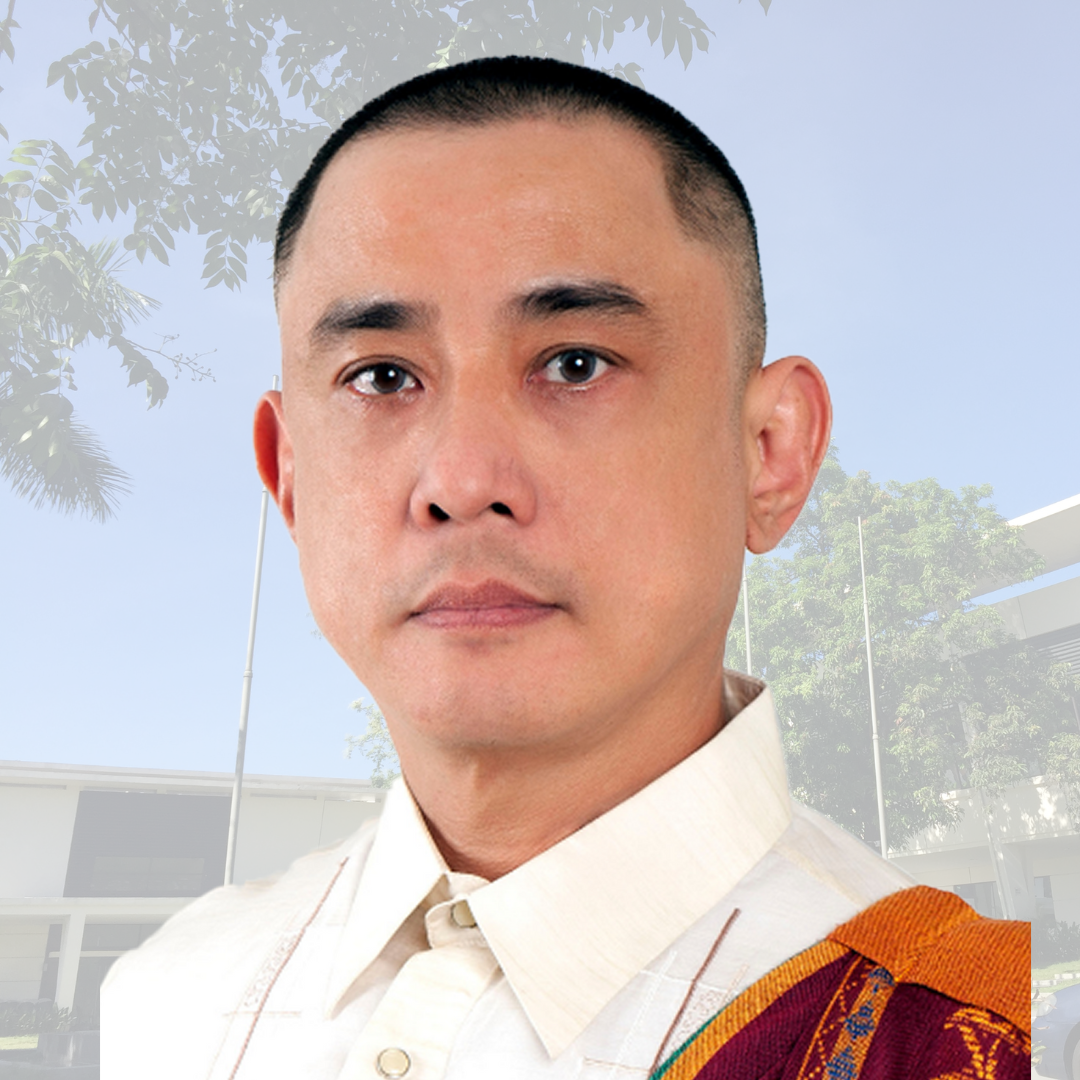
MCM (Matthew ConstancioMaglana) Santamaria is a Professor of Asian and Philippine Studies at the Asian Center, University of the Philippines Diliman. He received his Doctor of Law in Political Science from the Kyoto University Graduate School of Law in 1999. He holds the title of University of the Philippines Artist, and is also presentlya "One UP Professorial Chair" awardee. He has published many book chapters, articles and essays on the themes of ethnic conflict, Sama-Bajau ethnography, ritual and performance, and dance studies. Dr. Santamaria is also a practicing choreographer in the theatre arts. He has shown his choreographic works in Hanoi and NinhBinh, Vietnam; Honolulu and Lanai, Hawaii; Minsk, Belorussia; Phnom Penh, Cambodia; Shanghai, People’s Republic of China, Tainan and Taipei, Taiwan; and, Tokyo and Kyoto, Japan. He continues his advocacy in helping sustain Sama-Bajau traditional music and dance through the Bunga Arts Link (BAL), a performance group which he established in 2004. Through his work with the BAL, he has helped the Festival IgalAntarabangsa (FIA), a dance festival for the Sama-Bajau based in Semporna, Sabah, Malaysia. Through the BAL, he has also established the “Kulintangan Project,"a fund-raising endeavor for the purpose of purchasing kulintangan (graduated bossed-gong) music ensemble instruments for the Sama-Bajau diaspora communities in Luzon and the Visayas.